Showing posts with label 1897. Show all posts

Monday, December 15, 2025

Amos G. Randal (1828 -1897) - Undertaker


PCA Photo

Amos Randal was born in Cattaraugus County, New York state, about 1828.  In 1849 he caught gold fever and journeyed overland to California.  However, he seems not to have had much luck at mining and so turned to other occupations.

In 1860, he was a single man living in Marysville, Yuba County, California, and running a stationery store with two Lassiter brothers.  While there, he met and married Clara Jane McGrew on July 14, 1862.  Their first child, Norina Katherine, was born in March, 1864.

During the Civil War, Randal supplemented his income from the stationery store by serving in the militia as a recruiting officer.  In June, 1863, he was commissioned a sergeant major in the 2nd Battalion, 4th Brigade, California Militia.  On April 22, 1865, with the war drawing to a close, Randal enlisted in Company A, 4th California Infantry at the Presidio in San Francisco.  He went in as a 2nd lieutenant and soon rose to the rank of captain.  His military career turned out to be very short, however, as his unit mustered out on November 30, 1865.

The California Great Register of 1867 recorded the Randals living in Oakland, California.  Son Ernest Grant born in 1868.  Another daughter, Margaret “Daisy”, was born 1874 in Tulare, California.  The federal census of 1880 found the Randals living in Hills Ferry, Stanislaus County, California, where Randal was working as a carpenter.

Around 1882, the family moved to Prescott, Arizona, and Randal went into the undertaking business.  In April 1886, the Randals’ last child, Theodore, was born.

Moving to Phoenix in 1892, Randal became associated with the undertaking firm of Mr. W. A. Davis.   Amos Randal then applied for an invalid pension, citing health issues, but his application was rejected because his service had not begun until after the Civil War had ended.

Around 1894, Randal contracted blood poisoning when he stabbed his finger with an embalming needle.  He had several relapses which caused him much suffering.  Due to his ongoing health problems, his application for an invalid pension was finally approved in 1896.

On December 1, 1897, Randal was in Porter Cemetery, assisting with the burial of Gustavus A. Kirtley, a Confederate veteran.  As the mourners were leaving the grave, Randal walked to his buggy, then suddenly fell to his knees, pitched forward on his face and expired.  

Dr. Wylie was summoned, but Randal was beyond help.  A coroner’s jury decided that he had died of heart trouble, brought on by his bout of blood poisoning.  Randal was interred two days later in Porter Cemetery, after services conducted by the local GAR post.  Randal’s widow Clara Jane applied for and received a widow’s pension.

-by Donna L. Carr


Wednesday, July 30, 2025

Mary Florence Mann (1841 - 1897) - Educator (reposted)


West End School 
Library of Congress

Industrial Drawing - 1894


We are highlighting some of our business leaders in territorial Phoenix who were women.  Meet Mary Florence Mann!

Mary Florence was born about 1841 in Oswego, New York. She was the fourth of five children born to Daniel and Jane C. Shapley Card, farmers.  She entered the Oswego Normal and Training School in her late teens, graduating in 1863 with a teaching degree. By 1867, she was earning $500 a year as a schoolteacher in Cuba, New York. Sometime in the 1870s, she married Henry D. Mann, a physician and surgeon. The young couple moved to Tiffin, Ohio, where Henry attended Heidelberg College. Later, he did his residency at the University of Michigan at Ann Arbor before graduating from the Medical College in Albany, New York. He practiced for a short time in Ohio and Illinois before settling in Terre Haute, Indiana.


Florence continued to teach for a few years after marrying, but she is listed as a housewife on the 1880 federal census of Terre Haute. At some point thereafter, she and Henry separated but did not divorce.

In 1890, Florence came to Phoenix and was hired to teach in the Phoenix school system. Based on newspaper articles, she became well known as an educator. Besides teaching in the elementary schools, she often provided professional council and training at the Maricopa County Teachers’ Institutes, where she excelled in mechanical and industrial drawing.

She even persuaded the Phoenix school board to open a free night school for children over the age of 10 who were unable to attend day classes because of family obligations.

In 1893 Florence was appointed to the Maricopa Advisory Committee on Textbooks and School Law. Her duties included selecting the textbooks to be used throughout the district.

After retiring from teaching, she opened an art studio in Phoenix. A gifted artist, she painted many scenes of animals and the “wild and untamed west” in oils and watercolors. And she continued to volunteer at the night school she had started.

Florence died unexpectedly around 8 PM on March 22, 1897, while on her way home from seeing her students at the night school. Passersby heard her cry out in the alley beside the Ford Hotel on Washington Street and 2nd Avenue, Phoenix, Arizona, but she was gone before medical help arrived. Her doctor opined that she had died of an apoplexy—probably a cerebral hemorrhage caused by a burst aneurysm—as there were no signs of any trauma. She was 56 years old.

She was buried in City Loosley Cemetery and has no marker.  

- by Val

Friday, May 16, 2025

William Lindsey George (1832-1897) - Farmer and Contractor


PCA Archive

William Lindsey George was born April 29, 1832, in Shelby County, Kentucky, to James Whitefield George and Frances Booker, farmers.  The Georges had a total of eleven children.

Shelby County was not far from Louisville—and the Ohio River.  Many of Kentucky’s agricultural products were floated down the Ohio and Mississippi Rivers on flatboats to New Orleans.  So, after faraway Texas became a state, the Georges moved there, settling in Guadalupe around 1854.

William married Eliza LeGette in about 1858 and they soon had an infant son, James.  The federal census of 1860 records the family farming in New Braunfels, Comal County, Texas.  William’s parents and younger siblings lived on a ranch not far away.

After the outbreak of the Civil War, William waited until March 26, 1862, when he enlisted in Seguin, Texas.  He was assigned to Company K, 8th Texas Infantry, CSA, later under the command of Colonel Ireland.  The 8th Texas Infantry served in East Texas throughout the war, so William was able to visit his family occasionally.  His wife Eliza gave birth to son Henry in September, 1862, and to William Jr. in March 1864.  At the end of the war, William was discharged with the rank of captain.

Big events were taking place on the Great Plains, as the Transcontinental Railroad pushed westward.  By 1870, the entire George family had moved to Kansas City, where they worked as cattle traders.  William even became (briefly) the president of a Kansas City bank.

In 1886, the Georges moved to Arizona, where William ran a freighting business and became involved in building railroads, canals and reservoirs.  He was one of the contractors who built the Gila Bend canal and the Agua Fria reservoir.

As a prominent businessman, William maintained a keen interest in local politics and was several times asked to run for office.  In 1888, he yielded to voters’ entreaties but bowed out rather than stoop to the kind of unethical behavior needed to get elected.  Thereafter, he was elected to the County Board of Supervisors strictly on his merits.

In August 1897, William experienced a couple of angina attacks.  Although the attacks passed, his doctor advised him to send for his wife, who was in California.  She arrived in Phoenix just five hours before William died early in the morning of August 20th. 

The funeral sermon was preached by Rev. W. E. Vaughan of the Methodist Episcopal church.  A modest man, William had previously requested that there be no empty eulogies, but his friends and business associates attested to his honesty and moral uprightness.   He was buried near his brother James Benjamin in Porter Cemetery, Block 41, space B. 

by Donna L. Carr 


Monday, December 16, 2024

#7 Elizabeth “Libbie” H. Taylor (abt 1850-1897) - Immigrant from Canada


PCA Archives

Libbie (maiden name unknown) was born in Canada about 1850.   At some point, she came to the United States and married Arthur W. Taylor, born around 1845 in New York state.  There is no evidence that the two ever had any children.

In 1880, Libbie and her husband were living in Denver, Arapaho County, Colorado, where Arthur was a molder at the  Colorado Iron Works. 

The Taylors were in Phoenix by 1894, but thereafter it appears that Libbie and her husband separated, with Arthur moving to Los Angeles.  Though estranged, they nevertheless did not divorce.  Apparently Libbie had enough money to be self-sufficient, as she bought several lots in the Churchill addition for $3000, intending to use them as rental properties.

Libbie developed a case of pneumonia and died December 22, 1897, at her home at 27 South Fourth Avenue in Phoenix.  Her funeral was postponed until after Christmas as friends sought to reach her husband in California by telegraph.  She was buried in Loosley Cemetery, Block 5, Lot 11.  One obituary gave her full name as Libbie H. Y. Taylor, possibly indicating she had been previously married. 

Shortly after Libbie’s funeral, her husband returned to Phoenix to take over her affairs.  Mr. Taylor had his late wife’s remains moved to Porter Cemetery and a large marble monument erected.  The plot Libbie is buried in has plenty of room for other burials, so perhaps he was planning to be buried next to her. 

Since Libbie had died intestate, a special administrator was appointed to handle her estate.  Notice was given and several creditors came forward:  James M. Creighton was one of them.  Keystone Pharmacy submitted an unpaid bill for quinine tablets and laudanum, and there were also bills for nursing and final expenses.  After all of Libbie’s debts had been settled, her husband A. W. Taylor inherited $4666 in cash and real estate.

Arthur was last known to be residing in Los Angeles, California, with a family named Riley and working as a teamster in 1900.

-by Patricia G.


Saturday, December 14, 2024

#9 Mary A. List Mosier (1843-1897) - Farmer’s Wife


PCA Archives

Mary Ann List was born August 15, 1843, in Pennsylvania.  She was the oldest of seven children belonging to David J. List and Ursula Newell.

The Lists had moved to Lee County, Iowa, by 1858, when Mary Ann married Benedict Mosier at the tender age of fifteen.  Soon thereafter, the young couple moved to Tyler Township, Hickory County, Missouri, where Mary Ann bore eleven children between 1860 and 1875.  Six survived to adulthood.  The Mosiers were farmers and, apparently, quite successful ones.  Mary Ann’s parents moved to Missouri at about the same time.

In the summer of 1861, Benedict Mosier enlisted in Company C, 8th Missouri State Militia Cavalry, serving in Captain William C. Human’s company.  The mission of the regiment was to prevent Confederate forces from establishing a foothold in southwestern Missouri.  The soldiers went on numerous scouting patrols and engaged in a few skirmishes.  Since Mosier’s duties kept him fairly close to home, he was able to make periodic visits to his family. 

Mary Ann’s father, David List, served in the same regiment although he was more than forty years old at the time.  He died in Missouri in 1868, leaving his wife and five children.

Although the Mosiers had a productive farm in Missouri, they moved to Arizona around 1884, as did Mary Ann’s widowed mother and several of her siblings.  Possibly the Mosiers’ son Sydney was ill and required a warm, dry climate.  He died on 30 May 1886 and was buried in City Loosley Cemetery.

Mary Ann undoubtedly lived the life of a farmer’s wife.  In addition to the usual household chores, she occasionally worked in the fields and forked hay for the cattle.

Late in life, Mary Ann developed heart problems.  In April 1897, she resigned her position as a Sunday School teacher because of ill health.  While driving home on 14 December 1897, she apparently suffered a stroke.  A neighbor moving cattle noticed that the horse and buggy had stopped in the road and came to her aid, but attempts to revive Mary Ann failed.  She too was buried in City Loosley Cemetery.

Following Mary’s death, Benedict Mosier was much chagrined to learn that Arizona was a community property state and that Mary’s property would be split between him and their children.  It had never occurred to him that his late wife owned anything, much less half of the marital assets.

Mary Ann’s mother, Ursula Newell List, outlived her, dying in Glendale, Arizona, in 1906.

Benedict died on 4 October 1908 and was buried in the family plot in City Loosley.

-by Donna Carr


Wednesday, September 25, 2024

Lillian Gross (1868 - 1897) - The Last Train Ride from Congress

Bing AI/Val Prompt

On a scorching July day in 1897, a northbound train pulled into Phoenix, carrying a mysterious man and woman who quietly disembarked. They registered at the Ford Hotel, posing as husband and wife, yet curiously booked separate rooms. By morning, the woman was teetering on the brink of death, lay gravely ill, and her mysterious companion had vanished without a trace.

With her final breaths, the woman identified herself as Mrs. Lillian Gross of Congress, revealing that her real husband, George, was miles away working in Vulture. The man who escorted her was not her husband. Who was this figure that disappeared leaving Lillian to meet her tragic fate alone?

-Val "Shadow Archives"


"A Sad Death"
Phoenix Weekly Herald, July 15, 1897


Monday, August 5, 2024

Dr. Scott Helm (1862-1897) - Surgeon-General of Arizona


Arizona Memory Project


We are running bios this month on physicians.  This is a repost of Dr. Helm, who is still a notable Phoenix figure even today!

A native of Kentucky, Dr. Helm was a graduate of Princeton College, Rush Medical College in Chicago and Heidelberg University in Germany. He was undoubtedly one of the best educated and respected physicians in Arizona. In 1891, he joined the National Guard of Arizona.  

He was appointed surgeon-general, serving in that post for six years. During that time, he tirelessly promoted Arizona in medical journals as an ideal destination for sufferers of tuberculosis, arthritis and other ailments. He was also an active member of several fraternal organizations.

In 1889, he met Miss Norma Jackson, a Southern belle who had come to Arizona for her health. They were married 12 February 1890. Unfortunately, even his expert ministrations could not cure Norma, for she died on 30 April 1891 at the age of 28.

In July 1891, Dr. Helm was accused by two other physicians of having performed an abortion on Alice White, granddaughter of Ira Stroud of Phoenix. The case went to trial and, in March 1892, Dr. Helm was acquitted of any wrongdoing. Later in 1892, Dr. Helm married Miss Jane Beeler.

Helm loved horses, but he told friends that he would probably meet his death in a horse-related accident. His premonition came true on 8 October 1897. He was at the train station in downtown Phoenix when his fractious horse, Montrose, reared and fell, throwing Dr. Helm to the pavement. Dr. Helm died two hours later of intracranial bleeding. An impressive obelisk of polished red granite marks his grave, which is on the walking tour of Porter Cemetery. 

By Donna Carr


PCA Archives


Monday, March 4, 2024

John David Murphy (1830 - 1897) - Civil War Soldier


Bing AI


John David Murphy was a Roman Catholic of Irish descent.   Records imply that he was known throughout his life as John D, John David, or Jerry. 

In April 1853, John married Sarah C. Jacobus.  It was a ‘runaway marriage’ or elopement, so the young couple married in Essex County, New Jersey, where they were not known.

The Murphys had five children:  Jane, Sarah Elizabeth, Mary, Jerome Franklin, and Loretta.  The federal census of 1860 recorded the Murphys living in Orange, Essex County, New Jersey, where John was working as a carpenter.  The family seems to have been quite poor.

Notwithstanding his age, John D. Murphy volunteered to fight in the Civil War.  He enlisted on May 23, 1861, and was assigned to Company F, 72nd New York Infantry.  His unit fought in the Peninsular Campaign, and Murphy was reported as wounded at the Battle of Williamsburg on February 5, 1862.

After the war, Murphy was unable to work and, by 1880, he was no longer with his family.  Family members say that he had developed a mania for wandering around the country.  He lived for a time at the Old Soldiers Home in Dayton, Ohio, before heading out for Arizona.

Around July 1, 1897, Murphy was living in a boarding house in Phoenix when he fell ill.  His landlord cared for him for four days before sending him to the County Hospital.  Murphy died there on July 10, 1897, and was buried in the Salt River Cemetery.  check out more of his story at the PMMP!

-story by Donna Carr


Wednesday, December 6, 2023

#3 - C.H. Clausen (1848 - 1897) - Photographer


PCA Archive

C. H. Clausen was born January 11, 1848. A photographer, he was working in Oakland, California, in 1889. By 1895, he had moved to Phoenix (possibly for his health) and had opened a studio at 438 E. Monroe Street. Some of his photographic portraits survive; one of Father Michael Vandermaesen is in the archives of the Roman Catholic diocese of Tucson. Clausen died December 24, 1897, and was buried in Porter Cemetery.

Monday, December 4, 2023

#1 - Amos G. Randal (1825 approx. - 1897) - Mine Owner


Picture by Patty

Amos G. Randal was born in Cattaragues County, New York, between 1825 and 1828. He was in San Francisco when he married his second wife in 1862. Owing to his interest in mining, he even lived in South America for a time. In later years, he became an undertaker and moved to Arizona. He was overseeing the funeral of a Confederate veteran in City/Loosley Cemetery on December 1, 1897, when he unexpectedly collapsed and died. Randal was buried in Porter Cemetery.

Wednesday, June 28, 2023

Joannes Baptiste Steyaert (1859-1897)


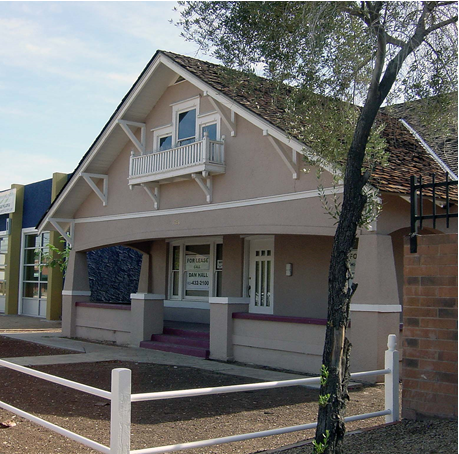
Steyaert/Swindall House
Courtesy of Donna Carr 

Joannes Baptiste Steyaert was born 7 October 1859 in Evergen, Belgium—avery small village.  He and his wife, Matilda Van Damme, had a total of eight children, whose birthplaces provide a map of the family’s journey from Belgium to Arizona.

The three eldest children—Marie Victoria, Emil Johan and Augustine Bernard--were born in Belgium.  The fourth child, Marie Leona, and the fifth child, Benjamin Paul, arrived in 1890 and 1891 while the family was living in Winnipeg, Canada.  The Steyaerts seem to have gravitated to heavily forested areas, suggesting occupations associated with lumber.

 By the time the seventh and eighth children, Medard Tracy and Joseph Julius, were born in 1894 and 1897, the family was in De Pere, Wisconsin.  In the summer of 1897, the Steyaert family left Wisconsin for Arizona with newborn Joseph.  Within just a few weeks of their arrival, Joannes fell desperately ill.   After a protracted bout with typhoid which exhausted the family’s financial resources, he died on July 21, 1897, and was buried in the Loosley Cemetery.  His daughter Marie Victoria died of pneumonia a few months later, on November 21, 1897, and was buried in the same cemetery.

This left Matilda Steyaert destitute, with seven children to support.  They ranged from Emil, almost 12, to Joseph, a mere babe in arms.  The local newspaper, the Arizona Republican, appealed to its readership to assist the family.  The Steyaerts were listed intermittently as indigent between 1898 and 1900.

In time, however, the Steyaert children became old enough to support themselves.  In 1913, the boys built a fine house, designed by Howard B. Claflin, for their mother at 1021 East Washington.  The ten-room brick bungalow is said to have had screened sleeping porches and much built-in cabinetry.  Owing to the use of an innovative truss, the front porch offered an unobstructed view of the street.

Ben and Gus Steyaert became locomotive engineers for the Santa Fe Railway and the Southern Pacific Railroad respectively.  Emil was by turns a miner, prospector and truck driver for Union Oil.  Joseph Julius worked as a heavy equipment operator.  Only Medard and Frank carried on the family tradition of working with wood.  In 1928, Medard was managing a planing mill at 1501 South Central, which made cabinets and office furniture. 

With her children grown up, Matilda converted her bungalow on East Washington into a boarding house and rented rooms to guests regardless of race.  After her death on 27 July 1941, the house was sold to Golden and Elvira Swindall, who continued Matilda’s legacy of providing accommodations to African American guests who were not welcome at the segregated hotels in downtown Phoenix.  The Swindall Tourist Inn was listed in the famous ‘Green Book’ for Negro travelers;  Count Basie, Dizzy Gillespie and Jackie Robinson are believed to have stayed there.  Bought in 1996 to serve as the headquarters for the Desert Mashies golf club, the house is now on the National Register of Historic Places.

-by Donna Carr

check out our website at Pioneers' Cemetery Assocation.


Monday, March 6, 2023

Mary Florence Mann (1841 - 1897) - Educator (reposted)


Phoenix West End School, Library of Congress

Mary Florence was born about 1841 in Oswego, New York. She was the fourth of five children born to Daniel and Jane C. Shapley Card, farmers.

Mary Florence (she went by Florence most of her adult life) entered the Oswego Normal and Training School in her late teens, graduating in 1863 with a teaching degree. By 1867, she was earning $500 a year as a schoolteacher in Cuba, New York. Sometime in the 1870s, she married Henry D. Mann, a physician and surgeon. The young couple moved to Tiffin, Ohio, where Henry attended Heidelberg College. Later, he did his residency at the University of Michigan at Ann Arbor before graduating from the Medical College in Albany, New York. He practiced for a short time in Ohio and Illinois before settling in Terre Haute, Indiana.

Florence continued to teach for a few years after marrying, but she is listed as a housewife on the 1880 federal census of Terre Haute. At some point thereafter, she and Henry separated but did not divorce.

In 1890, Florence came to Phoenix and was hired to teach in the Phoenix school system. Based on newspaper articles, she became well known as an educator. Besides teaching in the elementary schools, she often provided professional council and training at the Maricopa County Teachers’ Institutes, where she excelled in mechanical and industrial drawing.

She even persuaded the Phoenix school board to open a free night school for children over the age of 10 who were unable to attend day classes because of family obligations.

In 1893 Florence was appointed to the Maricopa Advisory Committee on Textbooks and School Law. Her duties included selecting the textbooks to be used throughout the district.

After retiring from teaching, she opened an art studio in Phoenix. A gifted artist, she painted many scenes of animals and the “wild and untamed west” in oils and watercolors. And she continued to volunteer at the night school she had started.

Florence died unexpectedly around 8 PM on March 22, 1897, while on her way home from seeing her students at the night school. Passersby heard her cry out in the alley beside the Ford Hotel on Washington Street and 2nd Avenue, Phoenix, Arizona, but she was gone before medical help arrived. Her doctor opined that she had died of an apoplexy—probably a cerebral hemorrhage caused by a burst aneurysm—as there were no signs of any trauma. She was 56 years old.  mary Florence is buried in an unmarked grave in City Loosley Cemetery.

-Val

Wednesday, July 1, 2020

Dr. Scott Helm (1862 - 1897) - First Surgeon-General of AZ

Dr. Scott Helm
Arizona Memory Project
A native of Kentucky, Dr. Helm was a graduate of Princeton College, Rush Medical College in Chicago and Heidelberg University in Germany. He was undoubtedly one of the best educated and respected physicians in Arizona. In 1891, he joined the National Guard of Arizona.  


He was appointed surgeon-general, serving in that post for six years. During that time, he tirelessly promoted Arizona in medical journals as an ideal destination for sufferers of tuberculosis, arthritis and other ailments. He was also an active member of several fraternal organizations.

In 1889, he met Miss Norma Jackson, a Southern belle who had come to Arizona for her health. They were married 12 February 1890. Unfortunately, even his expert ministrations could not cure Norma, for she died on 30 April 1891 at the age of 28.

In July 1891, Dr. Helm was accused by two other physicians of having performed an abortion on Alice White, granddaughter of Ira Stroud of Phoenix. The case went to trial and, in March 1892, Dr. Helm was acquitted of any wrongdoing. Later in 1892, Dr. Helm married Miss Jane Beeler.

Helm loved horses, but he told friends that he would probably meet his death in a horse-related accident. His premonition came true on 8 October 1897. He was at the train station in downtown Phoenix when his fractious horse, Montrose, reared and fell, throwing Dr. Helm to the pavement. Dr. Helm died two hours later of intracranial bleeding. An impressive obelisk of polished red granite marks his grave, which is on the walking tour of Porter Cemetery. - Donna Carr

Monday, June 15, 2020

Mary Florence Card Mann (1841 - 1897) - Educator

Florence Mann often taught business methods
 to her students.  Here is a poster highlighting the
 different business methods of the time. 
Click to read a larger form.
Mary Florence was born about 1841 in Oswego, New York. She was the fourth of five children born to Daniel and Jane C. Shapley Card, farmers.


Mary Florence (she went by Florence most of her adult life) entered the Oswego Normal and Training School in her late teens, graduating in 1863 with a teaching degree. By 1867, she was earning $500 a year as a schoolteacher in Cuba, New York. Sometime in the 1870s, she married Henry D. Mann, a physician and surgeon. The young couple moved to Tiffin, Ohio, where Henry attended Heidelberg College. Later, he did his residency at the University of Michigan at Ann Arbor before graduating from the Medical College in Albany, New York. He practiced for a short time in Ohio and Illinois before settling in Terre Haute, Indiana.

Florence continued to teach for a few years after marrying, but she is listed as a housewife on the 1880 federal census of Terre Haute. At some point thereafter, she and Henry separated but did not divorce.

In 1890, Florence came to Phoenix and was hired to teach in the Phoenix school system. Based on newspaper articles, she became well known as an educator. Besides teaching in the elementary schools, she often provided professional council and training at the Maricopa County Teachers’ Institutes, where she excelled in mechanical and industrial drawing.

She even persuaded the Phoenix school board to open a free night school for children over the age of 10 who were unable to attend day classes because of family obligations.

In 1893 Florence was appointed to the Maricopa Advisory Committee on Textbooks and School Law. Her duties included selecting the textbooks to be used throughout the district.

After retiring from teaching, she opened an art studio in Phoenix. A gifted artist, she painted many scenes of animals and the “wild and untamed west” in oils and watercolors. And she continued to volunteer at the night school she had started.

Florence died unexpectedly around 8 PM on March 22, 1897, while on her way home from seeing her students at the night school. Passersby heard her cry out in the alley beside the Ford Hotel on Washington Street and 2nd Avenue, Phoenix, Arizona, but she was gone before medical help arrived. Her doctor opined that she had died of an apoplexy—probably a cerebral hemorrhage caused by a burst aneurysm—as there were no signs of any trauma. She was 56 years old.