Showing posts with label 19th Century Mining. Show all posts

Wednesday, June 26, 2024

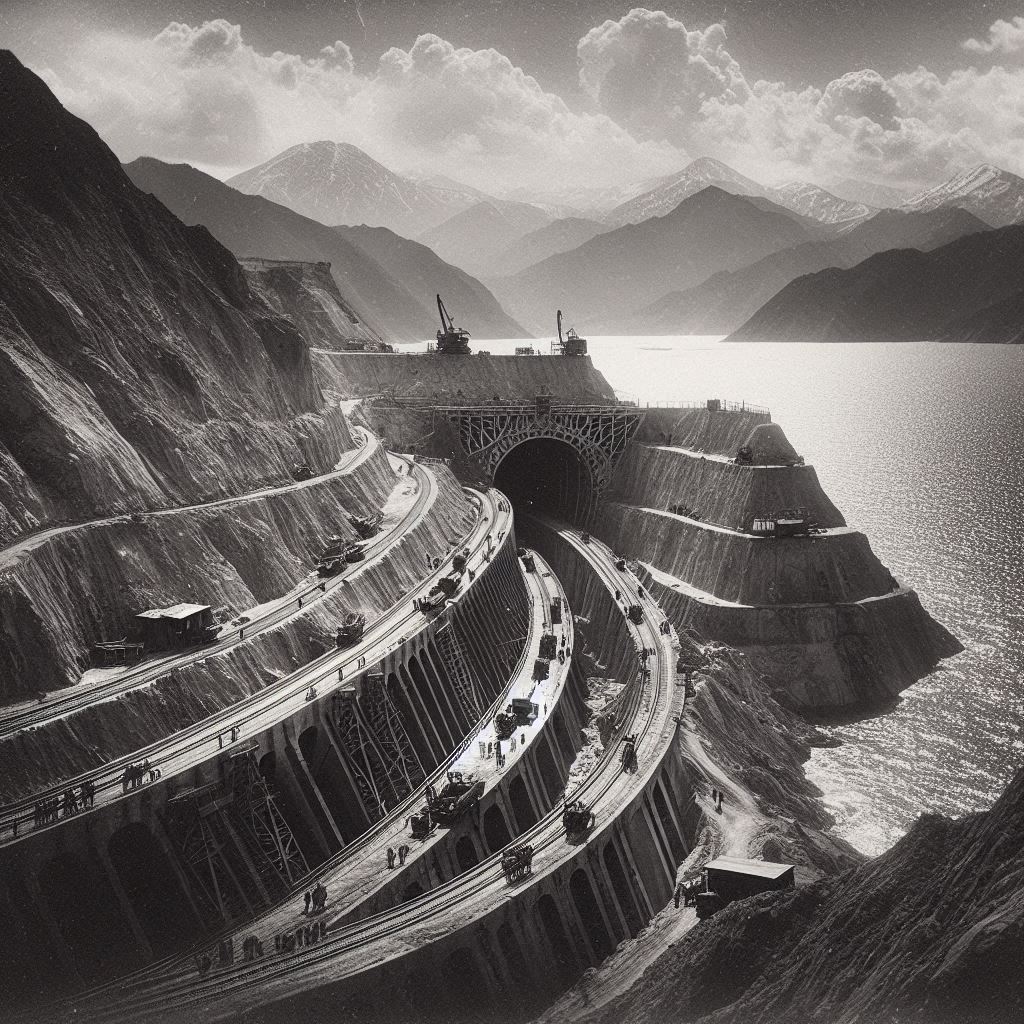
The Daring World of Submarine Mining in the 1800s


Bing AI

In the late 1800s, an innovative yet perilous approach to mining was developed in England and Wales: submarine mining. Miners began extending tunnels from the shoreline deep under the seabed to access coal deposits located offshore. This method allowed for the exploitation of coal seams that stretched beneath the ocean, opening new avenues for resource extraction that were previously thought inaccessible.

However, submarine mining came with significant risks. The tunnels, vulnerable to the ocean's pressure, posed severe hazards from flooding. Additionally, these underwater environments were prone to the accumulation of dangerous gases, increasing the risk of explosive methane gas incidents. Despite these dangers, the drive for industrial progress and the high demand for coal continued to push the boundaries of traditional mining techniques during this era.

-Val


Wednesday, June 12, 2024

"Desert Ships": How Camels Helped the U.S. Army and Arizona Mining


Camel
Library of Congress LC-DIG-hec-29929


Camels were used in Arizona during the mid-19th century as part of an experimental initiative by the U.S. Army. This initiative, known as the U.S. 'Camel Corps', was established in the 1850s to test the viability of using camels for transportation and supply routes in the arid regions of the American Southwest, including Arizona.

The experiment began in 1856 when the U.S. government imported camels from the Middle East and North Africa. The camels proved to be well-suited for the harsh desert conditions, demonstrating their ability to carry heavy loads over long distances without needing much water. Despite their effectiveness, the outbreak of the Civil War and other logistical challenges led to the discontinuation of the Camel Corps by the late 1860s.

After the military disbanded the Camel Corps, many of the camels were sold to private owners, including those in the mining industry. Miners and prospectors found camels useful for hauling equipment and supplies across the rugged desert terrain of Arizona and nearby areas. However, as the use of railroads and other forms of transportation expanded, the reliance on camels gradually diminished. Some camels were released into the wild, and there were occasional sightings of feral camels in the southwestern United States for many years afterward.

-Val

Friday, June 7, 2024

Veins of Progress: 19th Century Mining


Mile Underground - The Wilson Mine, AZ 1903

Mining in the 1800s was marked by rapid growth and dramatic changes, profoundly impacting societies and economies around the world. Here are some interesting facts about mining during this period.

  • The 1800s saw several gold rushes that shaped entire regions and nations. The California Gold Rush (1848-1855) drew hundreds of thousands to the American West. Similarly, the Australian Gold Rushes started in 1851, and later, the Klondike Gold Rush in 1896 prompted a massive influx of prospectors to the Yukon in Northwestern Canada.
  • Alongside gold, silver was a major driver of mining activity. The discovery of the Comstock Lode in Nevada in 1859, one of the richest silver mines in America, prompted a "silver rush" similar to the gold rushes of the era.
  • The introduction of dynamite by Alfred Nobel in 1867 revolutionized rock blasting, greatly increasing the efficiency and scale of mining operations. The development of the steam engine also facilitated deeper mining through more effective pumping systems to remove water.
  • The demand for coal soared during the 19th century, driven by its critical role as a fuel for steam engines in factories, railways, and ships. This led to the expansion of coal mining across Europe and America, with Britain, in particular, becoming a major coal producer.
  • The 1800s were also a time when the environmental impact of mining began to be significantly felt. Large-scale deforestation, water pollution, and landscape alteration were common side effects of mining during this period, although environmental concerns were rarely addressed at the time.
  • The harsh and dangerous conditions in mines led to the early formation of labor unions and strikes. Miners were among the first groups to organize themselves to improve their working conditions, leading to better safety regulations and labor laws in the later years.

These facets of mining in the 1800s illustrate not only the industry's evolution but also its ability to transform societies and landscapes wherever it took hold.

 -Val